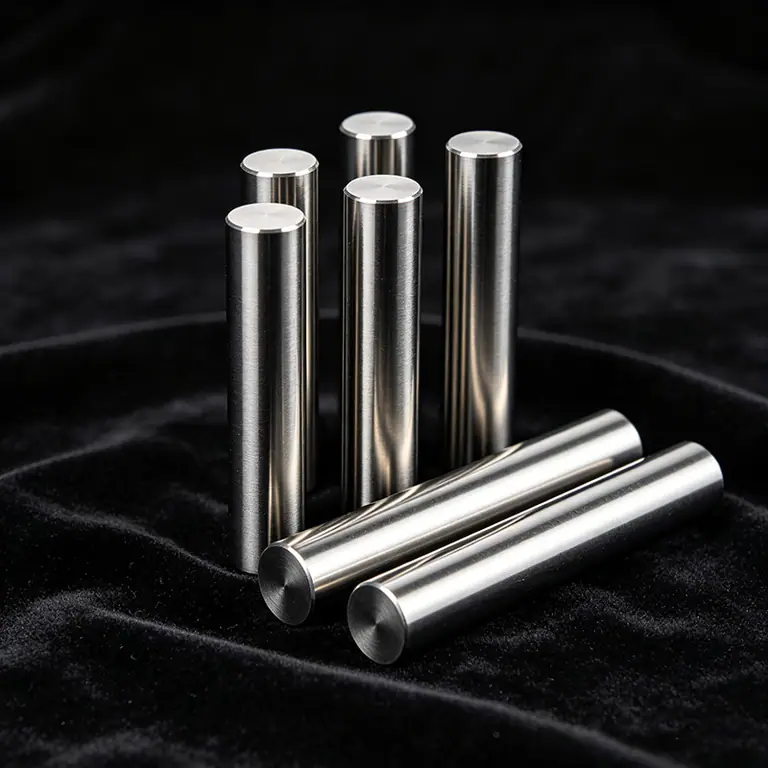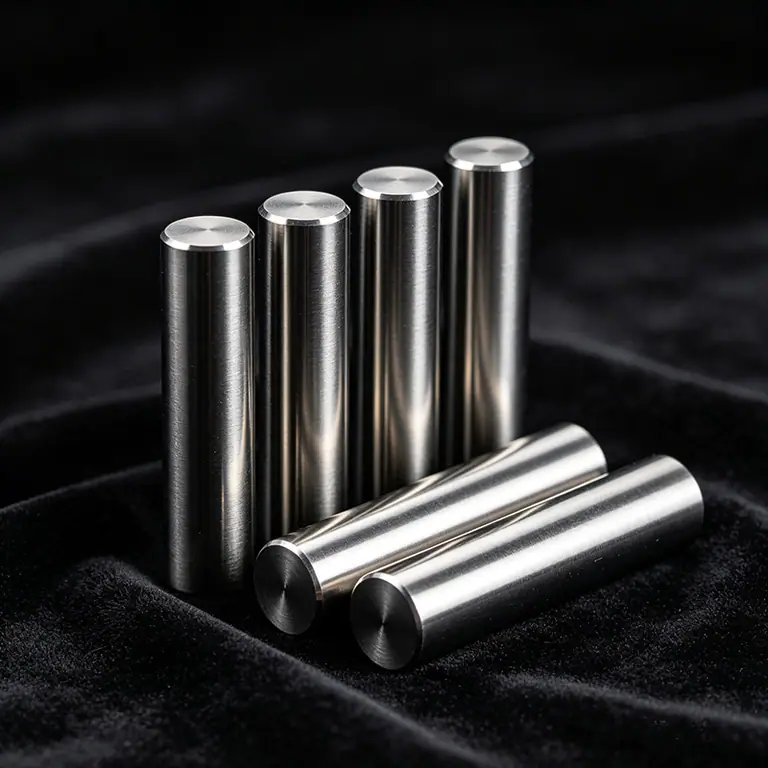
Cr12Mo1V1 and Cr8Mo2SiV are the two default cold-work tool steels in most die shops. They look almost identical on a certificate and behave quite differently in service.
Cr12Mo1V1 and Cr8Mo2SiV are the two most common cold-work tool steel grades. Is Cr8Mo2SiV — the "upgraded version" of Cr12Mo1V1 — better in every situation? The answer is not that simple. This comparison across five key dimensions will help you choose with confidence.
GB standard reference
- Standard
- GB/T 1299 (alloy tool steel) · GB/T 1220 (stainless)
- GB grades in this article
- Cr12Mo1V1 · Cr8Mo2SiV
- Also sold as
- SKD11 / D2 / 1.2379 / Kh12MF · DC53
- Hardness range
- HRC 58-62 (Cr12Mo1V1) · HRC 60-62 (Cr8Mo2SiV)
1. Chemical Composition Compared
Both are high-carbon, high-chromium cold-work tool steels, but Cr8Mo2SiV trims carbon and chromium while rebalancing molybdenum and vanadium.
| Element | Cr12Mo1V1 | Cr8Mo2SiV | Difference |
|---|---|---|---|
| C (Carbon) | 1.40-1.60% | 1.00-1.05% | Cr8Mo2SiV lowers carbon for higher toughness |
| Cr (Chromium) | 11.0-13.0% | 7.80-8.50% | Cr8Mo2SiV lowers chromium for finer carbides |
| Mo (Molybdenum) | 0.80-1.20% | 1.80-2.10% | Cr8Mo2SiV adds molybdenum for secondary hardening |
| V (Vanadium) | 0.20-0.50% | 0.80-1.20% | Cr8Mo2SiV adds vanadium for better wear resistance |
- Cr12Mo1V1 equivalents
- JIS SKD11 · AISI D2 · DIN 1.2379 · GOST Kh12MF
- Cr8Mo2SiV equivalents
- JIS SKD11 modified · AISI D2 mod · no GB equivalent
- Annealed hardness
- Cr12Mo1V1 HB 235 / Cr8Mo2SiV HB 210-230
- Working hardness
- Both HRC 58-62
2. Five-Dimension Performance Comparison
2.1 Hardness
Both reach HRC 60-62, but Cr8Mo2SiV retains higher hardness after high-temperature tempering (500-520 °C), which suits applications requiring that treatment. In everyday use, the hardness difference between the two is small.
2.2 Toughness (the key difference)
This is Cr8Mo2SiV's biggest advantage. With lower carbon and refined carbides, Cr8Mo2SiV's toughness is about 30% higher than Cr12Mo1V1. In stamping dies under impact loads, chipping rates drop significantly with Cr8Mo2SiV.
At HRC 61, Cr12Mo1V1 shows a Charpy impact value around 25 J/cm², while Cr8Mo2SiV reaches above 35 J/cm².
2.3 Wear resistance
Thanks to its higher vanadium content, Cr8Mo2SiV forms harder, more uniformly distributed MC-type carbides — so its wear resistance is slightly better than Cr12Mo1V1. In pure sliding wear (no impact), however, the gap is narrow.
2.4 Machinability
Cr8Mo2SiV's slightly lower annealed hardness makes it easier to cut. The recast layer after wire-EDM is thinner, which benefits high-precision edges. Grinding and polishing performance is comparable between the two.
2.5 Cost
Cr8Mo2SiV costs roughly 20-30% more than Cr12Mo1V1 as raw material. But factoring in longer die life and lower rework rates, the total cost of ownership can actually be lower.
| Criterion | Cr12Mo1V1 | Cr8Mo2SiV | Winner |
|---|---|---|---|
| Achievable hardness | HRC 60-62 | HRC 60-62 | Tie |
| Impact toughness at HRC 61 | ~25 J/cm² | >35 J/cm² | Cr8Mo2SiV |
| Wear resistance (sliding) | Good | Slightly better | Cr8Mo2SiV (narrow) |
| Machinability (annealed) | HB 235 | HB 210-230 | Cr8Mo2SiV |
| Raw material cost | Baseline | +20-30% | Cr12Mo1V1 |
| Availability in Φ2-Φ100 ground bar | Excellent | Excellent | Tie |
3. Selection Decision Matrix
Recommendations by application:
| Application | Recommended Grade | Reason |
|---|---|---|
| High-precision die-cutting rules | Cr8Mo2SiV | Tough — thin edges do not chip |
| Standard hardware stamping dies | Cr12Mo1V1 | Best value with balanced life |
| Heavy-plate, heavy-load blanking | Cr12Mo1V1 / Cr8Mo2SiV | Either works — depends on budget |
| Fiberboard / paperboard die cutting | Cr8Mo2SiV | Combines wear resistance and toughness |
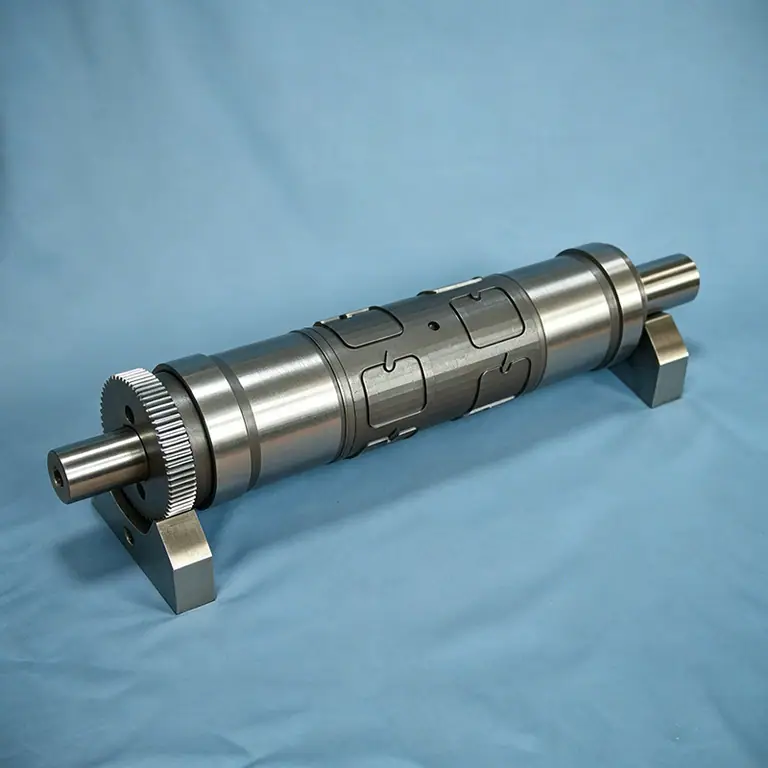
| Progressive-die punches | Cr8Mo2SiV | Impact resistant, long service life |
| Low-volume prototype tooling | Cr12Mo1V1 | Cheaper and easier to re-machine |
4. Conclusion
Cr12Mo1V1 is the dependable all-rounder; Cr8Mo2SiV is the targeted upgrade. Choose Cr8Mo2SiV when budget allows and Cr12Mo1V1 when it is tight — neither will let you down.
Cr12Mo1V1 vs Cr8Mo2SiV: frequently asked questions
For machining and heat treatment, yes — Cr8Mo2SiV is slightly softer in the annealed state and uses a comparable austenitizing window of 1020-1040 °C. The one rule that must not change is double tempering; Cr8Mo2SiV is less forgiving of a single temper than Cr12Mo1V1.
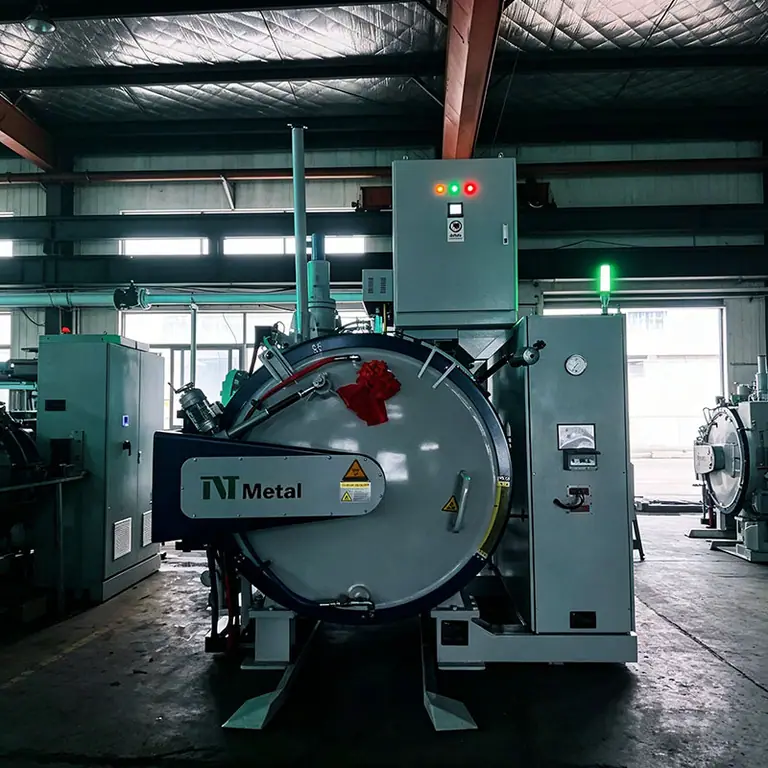
Whichever grade you choose, Nanfoss provides a one-stop service of vacuum heat treatment plus precision grinding. Round bar in both grades is in stock — inquiries are welcome.