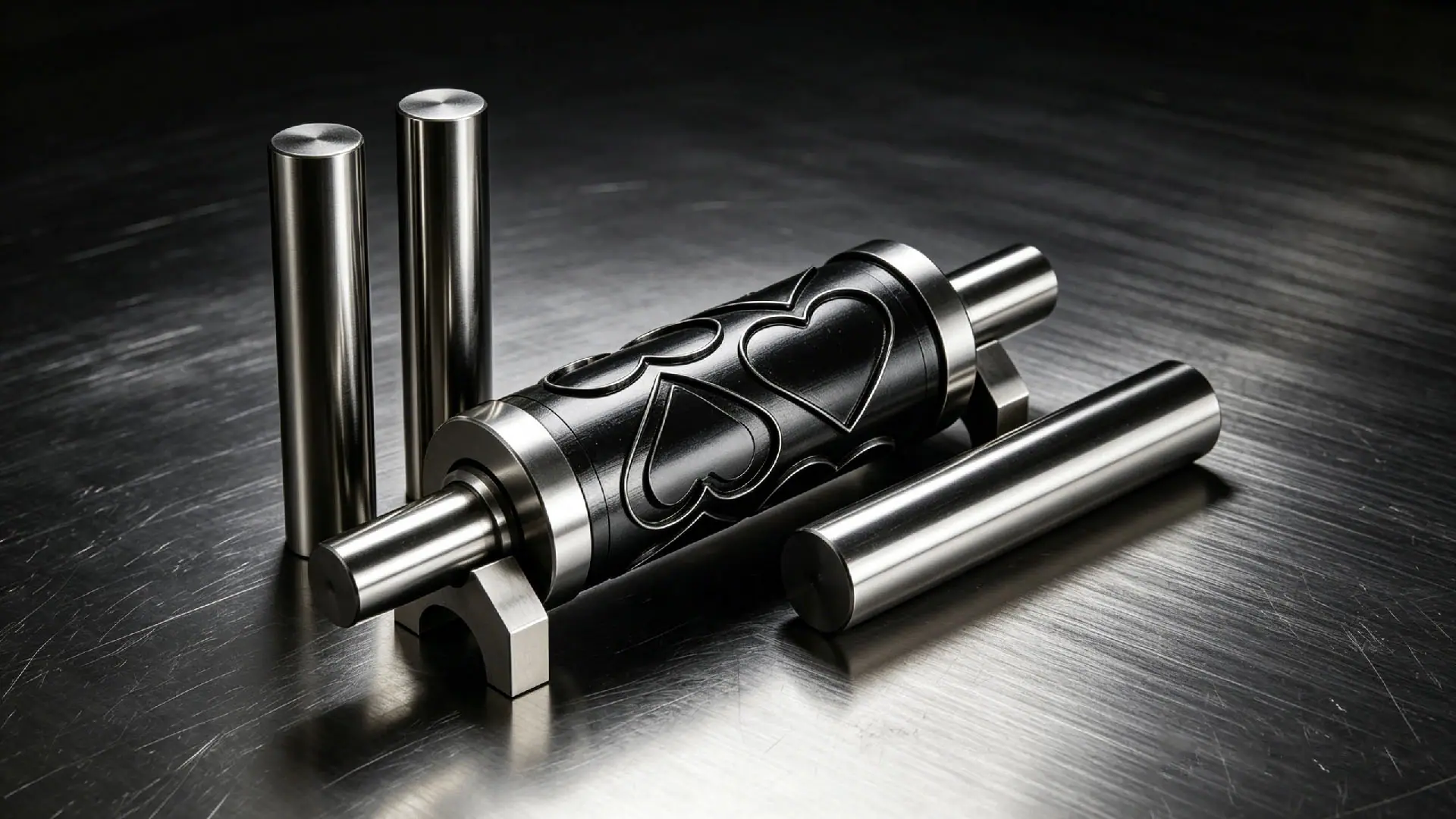
Die Steel Bar That Arrives Ready to Machine
Pre-hardened, straightened and ground before it ships, so your shop skips the furnace, the straightening press and the scrap that comes with them.
- ±1 HRC hardness uniformity
- Decarburization ≤ 0.05mm
- Quote within 1 business day
Two ways to buy: stock bar, or a die to your drawing
One is a catalogue part you can order by number. The other is engineered from your drawing. Pick the one your requirement belongs to.
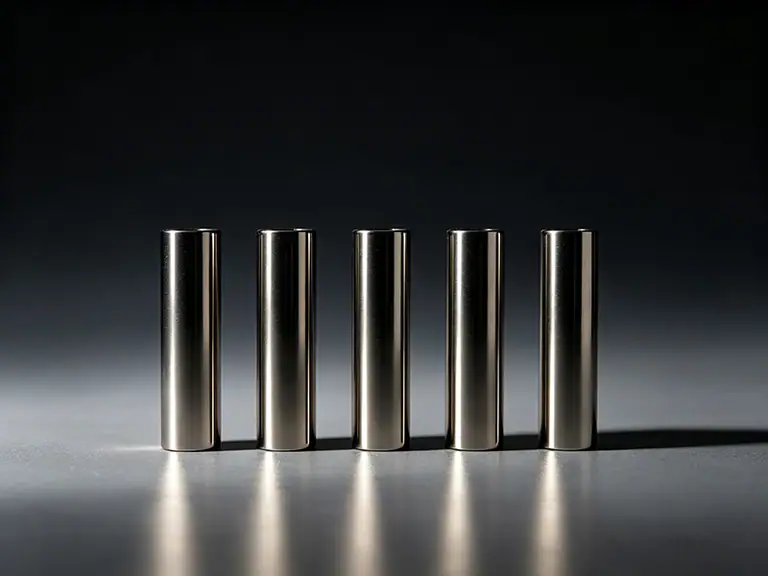
- Nine GB grades, cross-referenced to JIS / AISI / DIN / GOST
- Φ2–Φ100 mm, h7 or h6, four stock lengths
- ±1 HRC hardness uniform, ≤0.05 mm decarburization
- Dispatched in 3–5 business days from stock
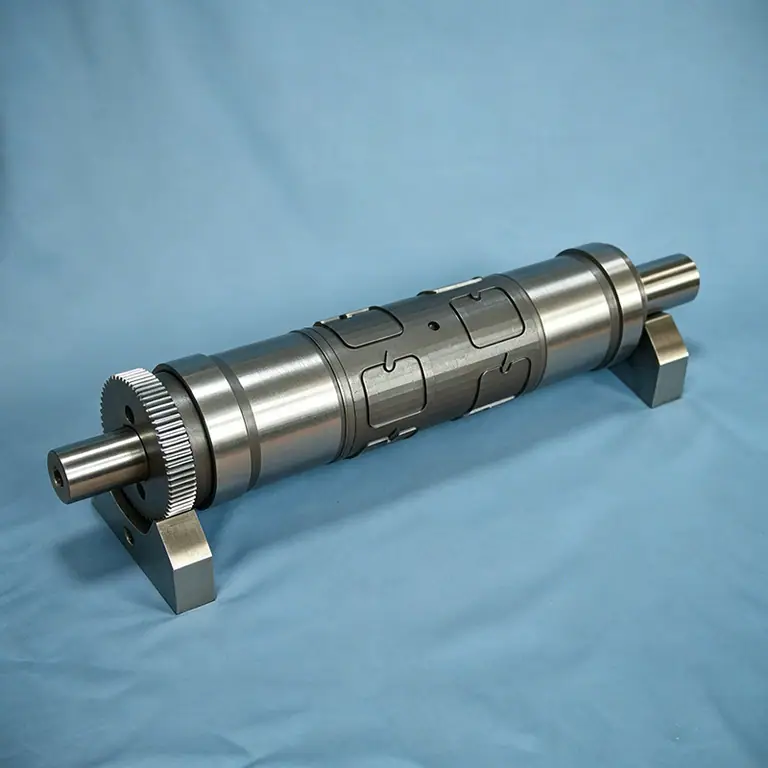
- Engraved · segmented · spiral · gear-driven
- Runout ≤0.01 mm · tooth height ±0.005 mm
- Made to your drawing, quoted from it
- Matched anvils and gears supplied
What makes this different
Most Shops Buy Soft Bar and Harden It Themselves. Here Is What That Costs.
Annealed tool steel is cheaper per kilogram. What it does not include is the furnace time, the straightening press, the grinding passes, and the scrap from the bars that move during quenching. That work does not disappear when you buy soft bar — it moves into your shop, along with its failure modes.
Annealed bar, hardened in-house
- You schedule the furnace. Hardening and tempering become your bottleneck, and a batch that misses its temper window is reworked or scrapped.
- Distortion is yours to correct. Quenching moves the bar. Straightening after temper is a second operation, and over-straightening cracks hardened steel.
- Surface carbon is lost. Unless the furnace atmosphere is controlled, the outer skin decarburizes. It looks fine and machines soft.
- Hardness drifts across the batch. Bar-to-batch spread invalidates the feeds and speeds you dialled in.
- Minimum quantities are the mill's. Buying a 3 m mill length to make a 300 mm component leaves the rest on the rack.
Bar that arrives already hardened and ground
- Heat treatment is behind you. Vacuum quenched and tempered to your target window before the bar is cut to your length.
- Straight and stress-relieved. Straightened to ≤ 0.05 mm / 300 mm after tempering, so it goes into a collet or a bar feeder without a correction pass.
- Decarburization is measured, not assumed. ≤ 0.05 mm verified by microhardness traverse on a sectioned sample — the check most buyers never run.
- One hardness window, bar to bar. ±1 HRC, so the parameters you set on Monday still hold on Friday.
- Short lengths, per bar. Stocked in 200 / 300 / 500 / 1000 mm; cut to length ±0.5 mm from stock, so you buy a component's worth, not a mill run.
The four values we hold and verify
Hardness along each bar
±1 HRC
Checked at head, middle and tail
Surface carbon loss
≤ 0.05 mm
Vacuum quench — no oxidised skin to grind off
Straightness
≤ 0.05 mm / 300 mm
Press straightened after tempering, indicated on V-blocks
Surface finish
Ra 0.6 - 0.2 µm
Ground and measured on a profilometer
Nine Grades, but Really Three Choices
You do not need to learn nine designations. Pick the family that matches how your tool fails, and the specific grade follows from it.
Cold-work chromium
Dies, punches and shear blades
High carbon and 8–12% chromium, so it holds a sharp edge against abrasive sheet. Cr12Mo1V1 is the volume choice; Cr8Mo2SiV is what you move to when edges chip rather than wear; 9CrWMn is the machinable option for shorter runs.
Cr12Mo1V1 · Cr8Mo2SiV · 9CrWMn
Compare the chromium gradesHigh-speed steel
Long runs and abrasive substrates
These keep hardness when the edge gets hot. Cobalt raises red hardness, and the powder-metallurgy grade removes the carbide segregation that limits conventional HSS. Choose by how hot the edge runs and how long the run is.
W6Mo5Cr4V2 · W6Mo5Cr4V2Co5 · W2Mo9Cr4VCo8 · PM23
Which high-speed steel, and whyMartensitic stainless
Food contact, medical and wet service
Where corrosion resistance is not optional. 9Cr18Mo holds high hardness for blades that must also resist staining; 30Cr13 trades hardness for toughness and cost in wet or food-contact tooling.
9Cr18Mo · 30Cr13
Grades by applicationOrdering
Bar Is a Catalogue Item. Order It in One Line.
Grade, diameter, tolerance and length — that is the whole specification, and it becomes a part number. Quote it in an email or drop it into the quote form and nothing has to be clarified afterwards.
NF–CR12–012H7–0300
Grade
CR12
from the designation
Diameter
012
mm, 3 digits
Tolerance
H7
ISO 286 class
Length
0300
mm, 4 digits
NF-CR12-012H7-0300
Cr12Mo1V1
Φ12 mm · H7 · 300 mm
The default cold-work grade
NF-CR8M-025H7-0500
Cr8Mo2SiV
Φ25 mm · H7 · 500 mm
When Cr12Mo1V1 starts chipping
NF-PM23-010H6-1000
PM23
Φ10 mm · H6 · 1000 mm
Long runs, carbide-like wear
Φ2 - Φ100 mm · stock lengths 200 / 300 / 500 / 1000 mm · stocked sizes dispatch in 3–5 business days
Hardened Round Bar vs. Rotary Dies · Different Specs That Matter
Targeted quality standards for different die applications
Round Bar Customers
Diameter Range
Full range Φ2 to Φ100 — ≈ 5/64" to 4"
Hardness Tolerance
Precision controlled ±1 HRC
Surface Finish
Precision ground straight bars
Delivery Condition
Precision ground, ready to use
Rotary Die Customers
Die Construction
Engraved / segmented / spiral / gear / slitting / complete
Tooth Profiles
Straight / helical / custom
Material Range
Cr8Mo2SiV / Cr12Mo1V1 / W6Mo5Cr4V2 / W2Mo9Cr4VCo8 / PM23
Order Method
Drawings / 3D models accepted
Grade selection
Know the job, not the grade number?
Most buyers arrive with a substrate, a press and a failure mode — not a steel designation. Start from whichever of those you already have.
Comparing two grades? The cross-reference chart maps all nine against JIS, AISI, DIN and GOST.
Contact Us
One-on-one engineering support, response within 24 hours
Get a Quote Now
Tell us your material, hardness and quantity — our engineers will reply with a custom solution and quote within 1 hour.
- Made-to-drawing manufacturing
- Fast quoting by specification
- Rapid response within 1 hour